Quick Answer
Yes, if your vent is short and easy to reach. With a dryer vent brush kit and a vacuum, you can clean a straight, ground-floor vent in about an hour. Long runs, roof vents, gas dryers and vents hidden in walls or ceilings are better left to a professional.
Prefer not to call? Get a quote online
Cleaning the lint trap after every load is a great habit, but it doesn’t touch the lint that collects inside the vent line. Over time that buildup restricts airflow and becomes a fire risk. Here’s how to clean the line yourself, and how to tell when it’s a job for a pro.
When DIY Works — And When It Doesn’t
| Your Setup | DIY Or Pro? |
|---|---|
| Short, straight vent through an outside wall | DIY is doable |
| Long run or several bends | Pro — brushes can snag and leave lint behind |
| Vent exits through the roof | Pro — needs roof access |
| Gas dryer | Pro, or be very careful with the gas connection |
| Vent runs inside walls or ceilings | Pro — you can't inspect or reach it |
| Bird nest or pest in the exterior cap | Pro |
Tools You’ll Need
- A dryer vent brush kit with flexible extension rods (sold at hardware stores)
- A vacuum with a hose attachment
- A screwdriver or nut driver for the vent clamps
- Foil HVAC tape or new clamps for reconnecting
- A drill, if your brush kit is drill-powered
How To Clean Your Dryer Vent, Step By Step
- Unplug the dryer. For a gas dryer, also shut off the gas supply valve before moving it.
- Pull the dryer away from the wall carefully, without kinking or straining the gas line or vent.
- Disconnect the vent from the back of the dryer by loosening the clamp.
- Vacuum the dryer’s exhaust opening and the lint trap housing.
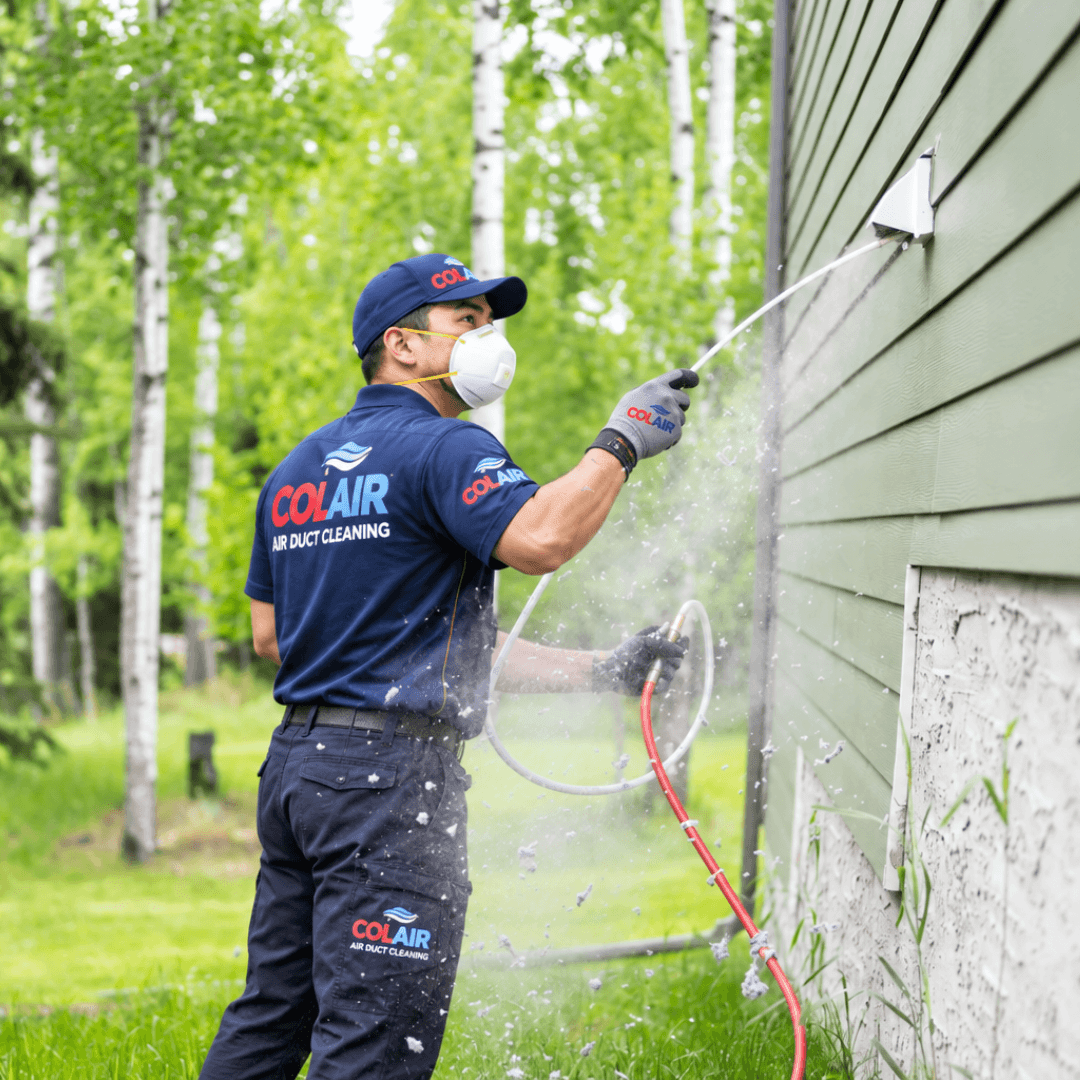
- Brush out the vent line from the inside, feeding the brush in slowly and pulling lint back toward you. Vacuum as you go.
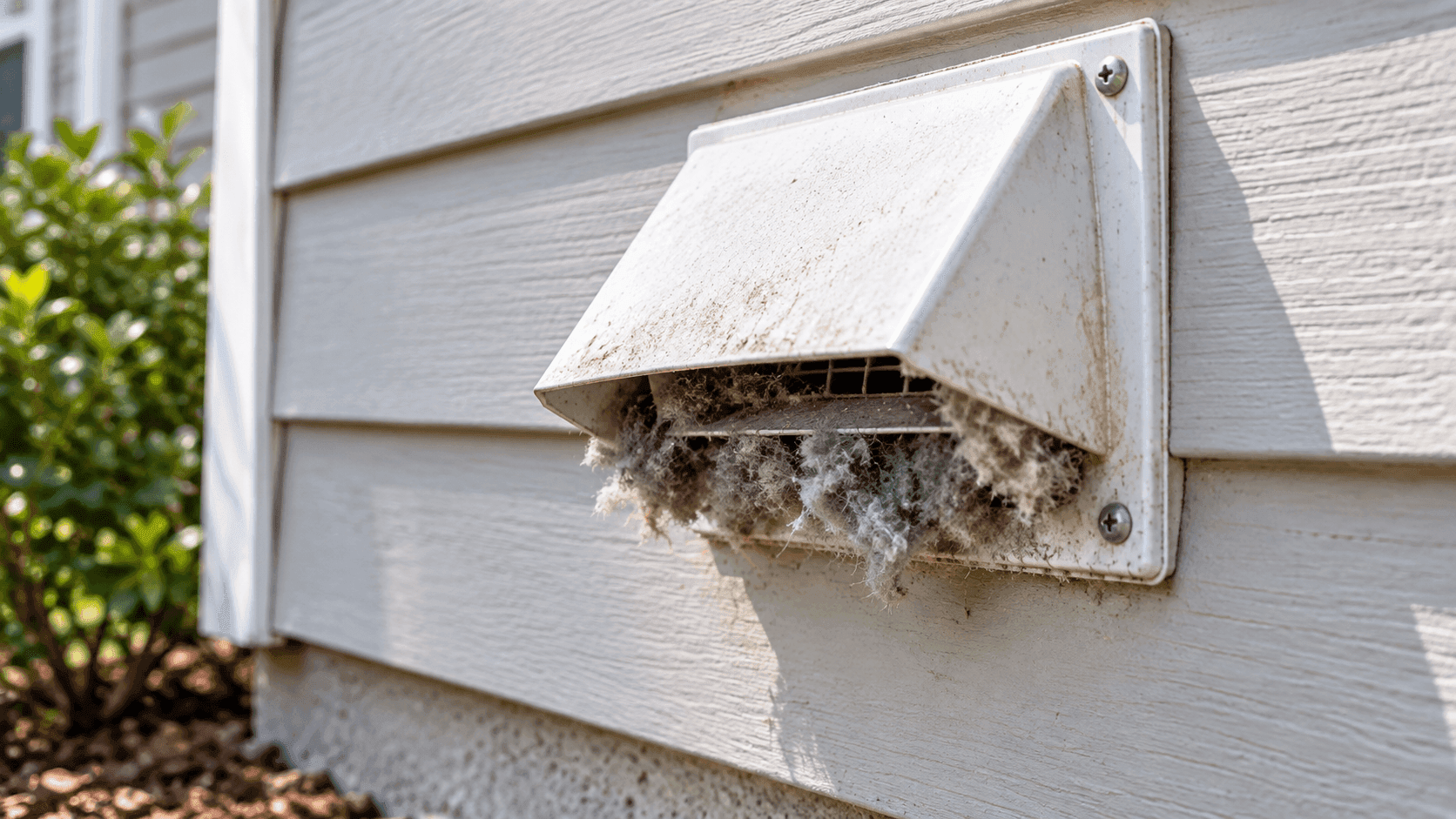
- Clean the exterior vent cap. Remove lint from the outside and make sure the flap opens and closes freely.
- Reconnect everything with clamps or foil HVAC tape. Don’t use screws, which catch lint inside the line.
- Test it. Run the dryer and check that air is flowing strongly out the exterior vent.
DIY Mistakes To Avoid
- Pushing lint deeper into the line instead of pulling it out.
- Crushing or kinking the vent when you push the dryer back.
- Using plastic or vinyl vent hose — use metal venting instead.
- Disturbing the gas line on a gas dryer.
DIY Vs Professional Dryer Vent Cleaning
| DIY | Professional | |
|---|---|---|
| Cost | A brush kit plus your time | About $100–$250, or less bundled |
| Long or complex runs | Hard to clean fully | Cleaned end to end |
| Roof vents | Not recommended | Handled safely |
| Time | About an hour for a simple vent | 30–60 minutes |
| Airflow check | By feel at the exterior vent | Tested before the crew leaves |
See our Ottawa dryer vent cleaning price guide for what a professional cleaning costs.
How To Keep Lint From Building Up
- Clean the lint screen after every load
- Check that the outdoor vent flap opens when the dryer runs
- Keep the vent route as short and straight as possible
- Use metal venting, not plastic or foil accordion hose
- Have the full vent line cleaned about once a year
These steps follow the City of Toronto’s dryer fire safety advice, which notes that a leading cause of home dryer fires is a lack of dryer maintenance.
The Bottom Line
You can clean a short, straight dryer vent yourself with a brush kit and a vacuum. For long runs, roof vents, gas dryers or vents hidden in walls, a professional cleaning is safer and more thorough. Whichever you choose, clean the full vent line about once a year.
Learn more about our dryer vent cleaning service.