Quick Answer
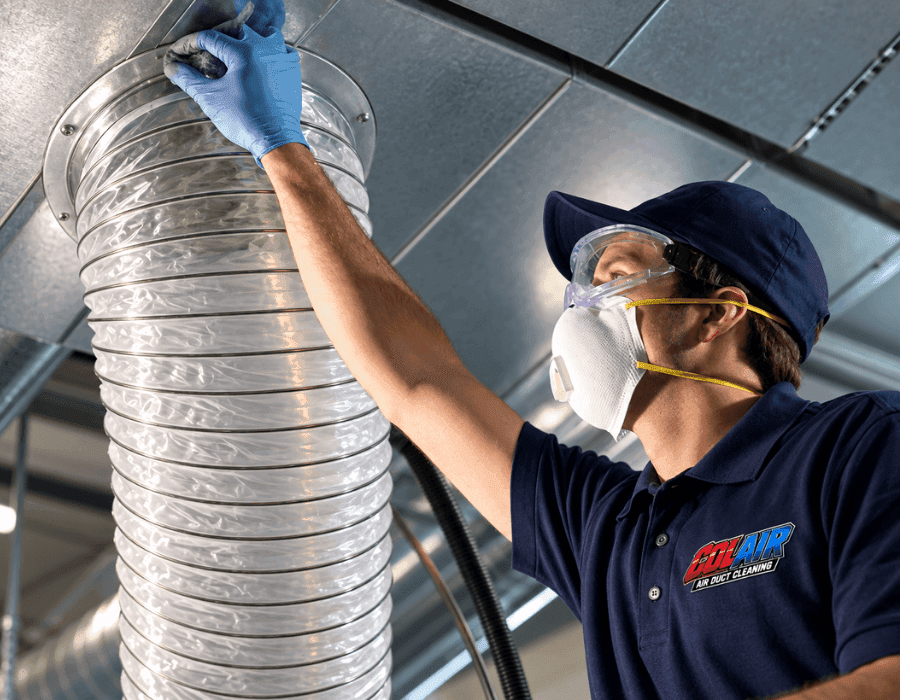
A professional duct cleaning uses a powerful vacuum connected to your duct system to put the whole system under suction, while compressed-air tools knock loose the dust stuck inside each vent and trunk line. The debris gets pulled out of your home and into the vacuum. Most homes take 1–2 hours.
Prefer not to call? Get a quote online
If you’ve never had your ducts cleaned, it’s fair to wonder what actually happens once the crew arrives. Here’s the full process, the way we do it on every job.
What Is Duct Cleaning?
Duct cleaning removes the dust, debris and contaminants that build up inside your home’s ductwork — the supply ducts that carry air into each room, the return ducts that pull it back to the furnace, and the main trunk lines that connect them.
The key idea is simple: put the system under strong suction, then loosen the debris so it gets pulled out of the ducts instead of blown into your home.
The Duct Cleaning Process, Step By Step
1. Inspection and assessment
We start by looking over your system — the ducts, filter and furnace — to see how much buildup there is and plan the cleaning around your home’s layout.
2. Vacuum truck setup
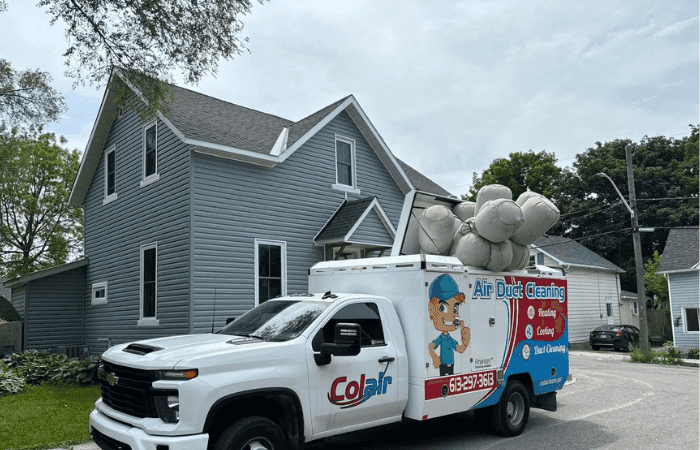
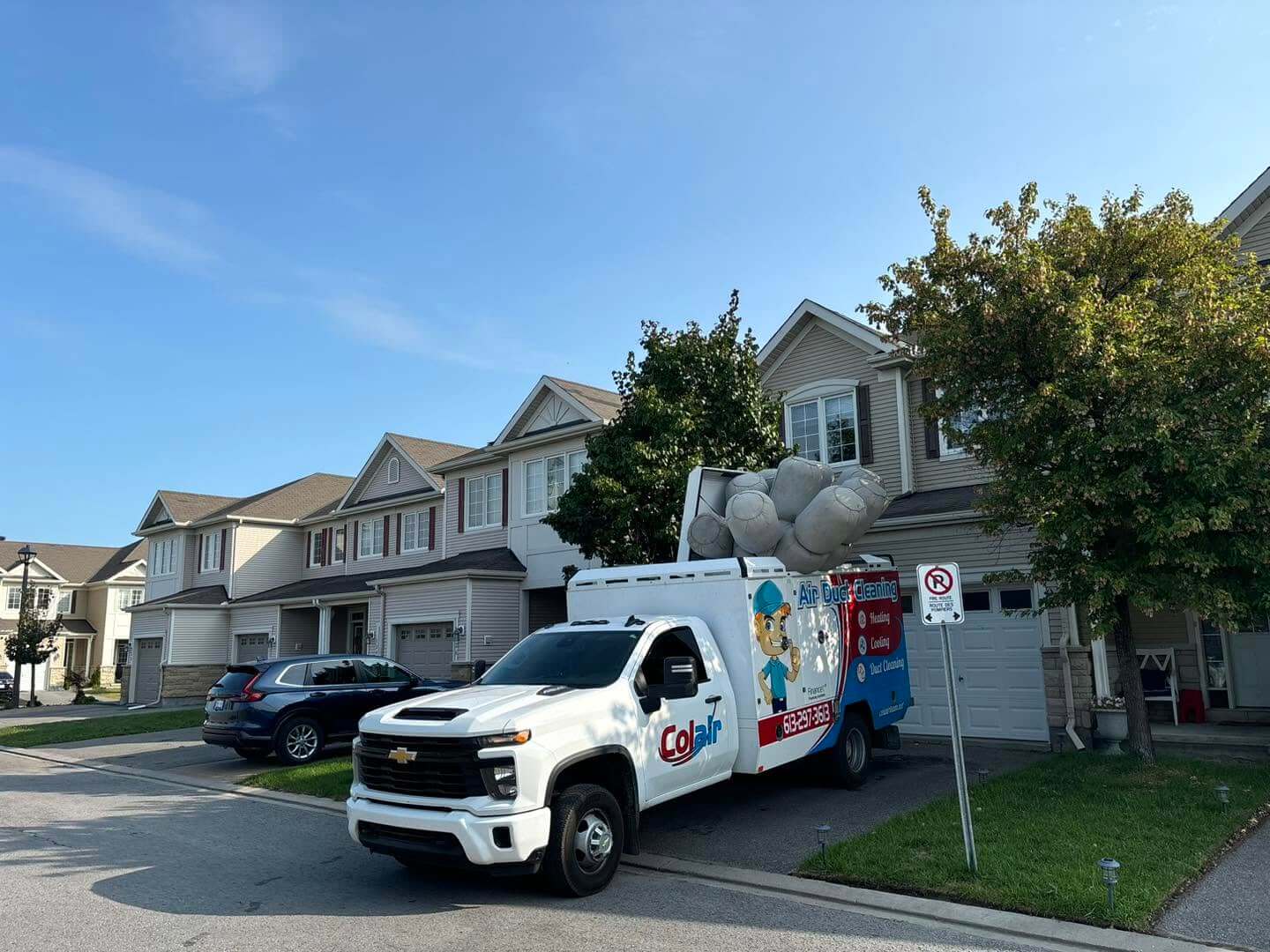
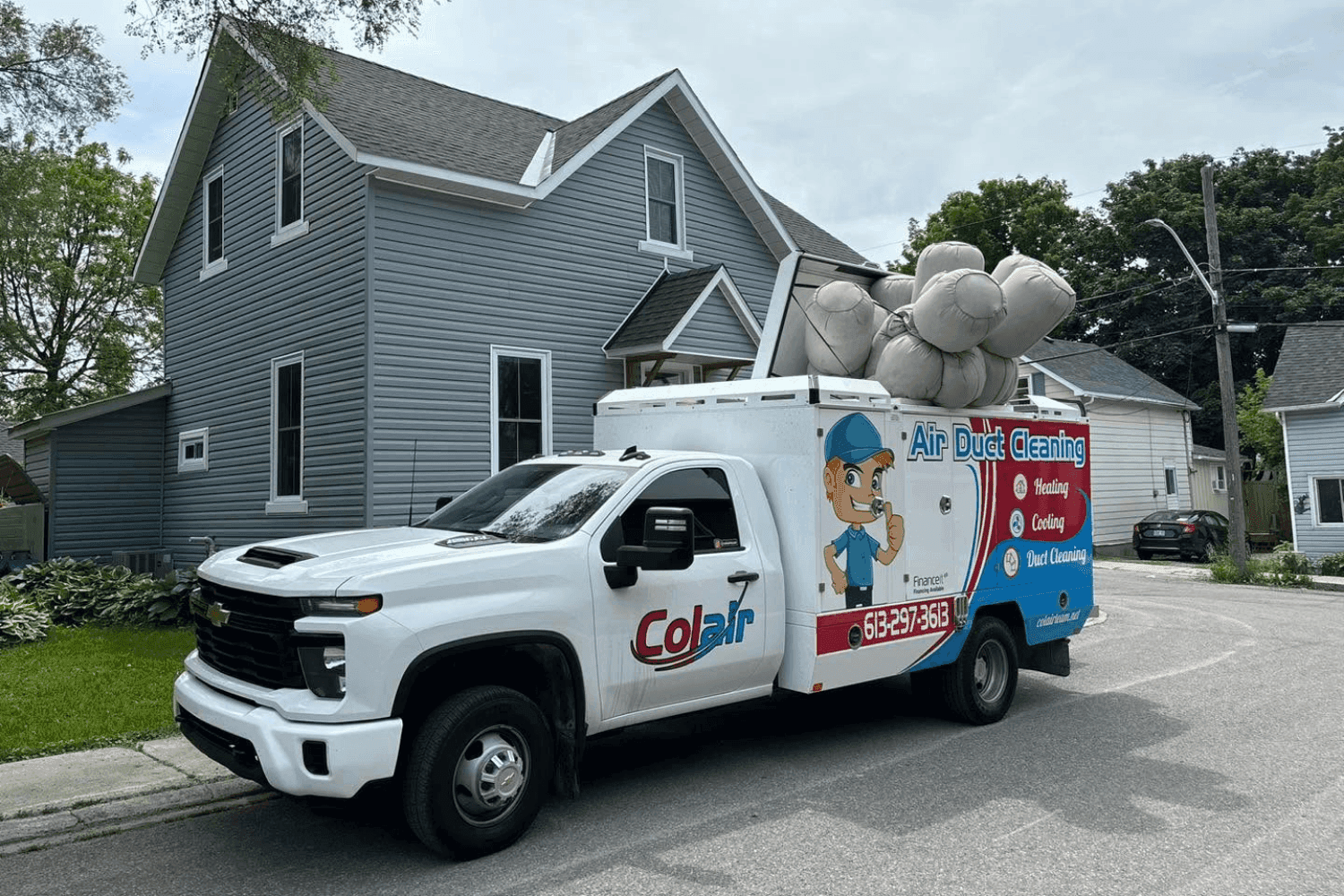
Our truck-mounted vacuum stays parked in your driveway. The noise and the debris stay outside, instead of a portable unit being rolled through your home.
3. Hose connections and sealing the vents
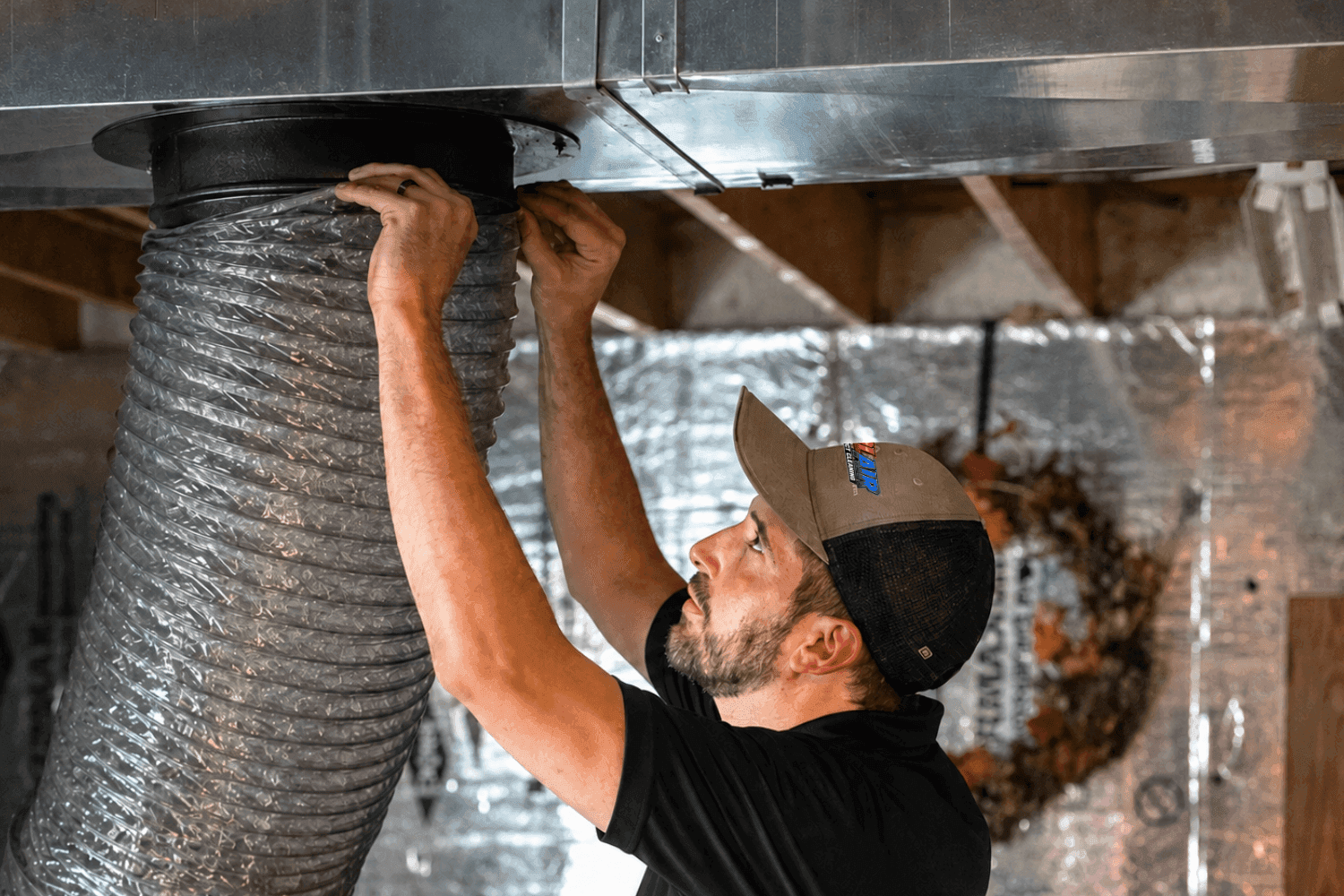
An 8″ vacuum hose runs into the furnace room and connects to the main supply duct, and a compressed-air line runs upstairs. Every vent is sealed, so the whole system builds full suction and no dust escapes into your living space.
4. Cleaning the supply vents
With suction on, we clean each supply vent using 250 psi air whips, starting at the highest point in the home and working down to the basement. Working top-down means loosened dust is always pulled toward the vacuum, never left to settle in a vent we’ve already cleaned.
5. Cleaning the main supply line
Air whips and scorpion balls — spinning tools that dislodge compacted debris — clear the main supply trunk, pushing everything toward the suction hose.
6. Switching to the return side
The vacuum hose moves to the return air trunk line, and we clean every return vent, again from upstairs down. Returns pull air toward the furnace all day, so they often hold the most dust.
7. Cleaning the main return line
The main return trunk is cleaned with air whips, pushing the last of the debris to the suction point before air reaches your furnace again.
8. Checking the work — and the furnace blower
We double-check the ductwork and take before and after photos. With our premium package, the technician also cleans the furnace blower fan and compartment, which pushes air through everything we just cleaned.
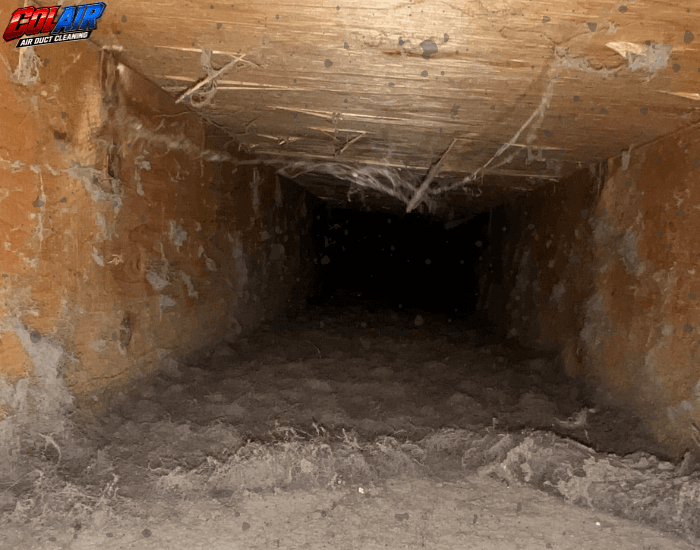 Before
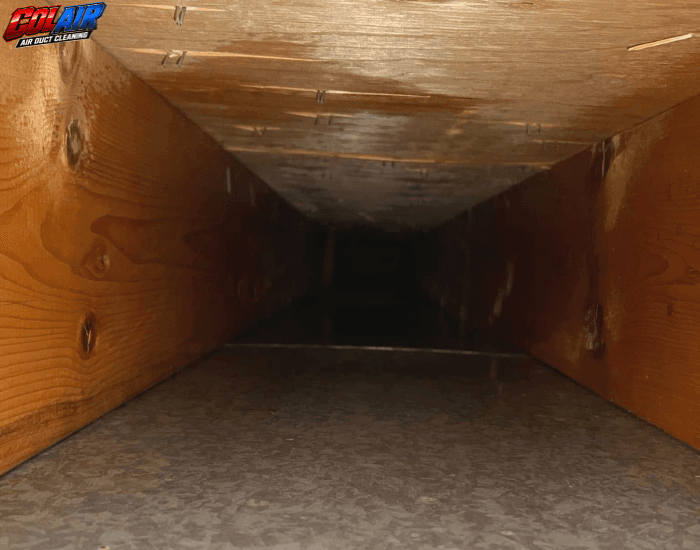 After
Truck-Mounted Vs Portable Equipment
Not every company cleans ducts the same way. The biggest difference is the equipment:
| Truck-Mounted | Portable Vacuum | |
|---|---|---|
| Suction power | Very high — powered by the truck | Limited by a wall outlet |
| Where the debris goes | Out of your home, into the truck | Into a bag or filter inside your home |
| Main trunk lines | Cleaned thoroughly | Often hard to reach properly |
| Noise inside your home | Low — the unit stays outside | Louder — the unit is indoors |
Colair uses truck-mounted equipment on every job. Learn more about our residential duct cleaning, or see how the best duct cleaning companies in Ottawa compare on equipment, price and reviews.
How Long Does Duct Cleaning Take?
Most residential duct cleanings take 1–2 hours. Larger homes, homes with more vents, or systems with heavy buildup can take longer. You’ll get a time estimate before the work starts.
How To Prepare For Your Appointment
- Clear a path to your furnace and to each vent
- Leave driveway or curb space for the truck
- Move furniture or rugs covering vents if you can
- Keep pets in a separate room while the crew works
- Plan to be home so we can walk you through what we find
Want The Deep Dive?
See every step with photos on our duct cleaning process page.
The Bottom Line
Professional duct cleaning works by putting your whole system under strong suction, then loosening the debris inside every vent and trunk line so it gets pulled out of your home. Done properly with truck-mounted equipment, it takes 1–2 hours for most homes and covers every supply and return line — not just the vents you can see.