Quick Answer
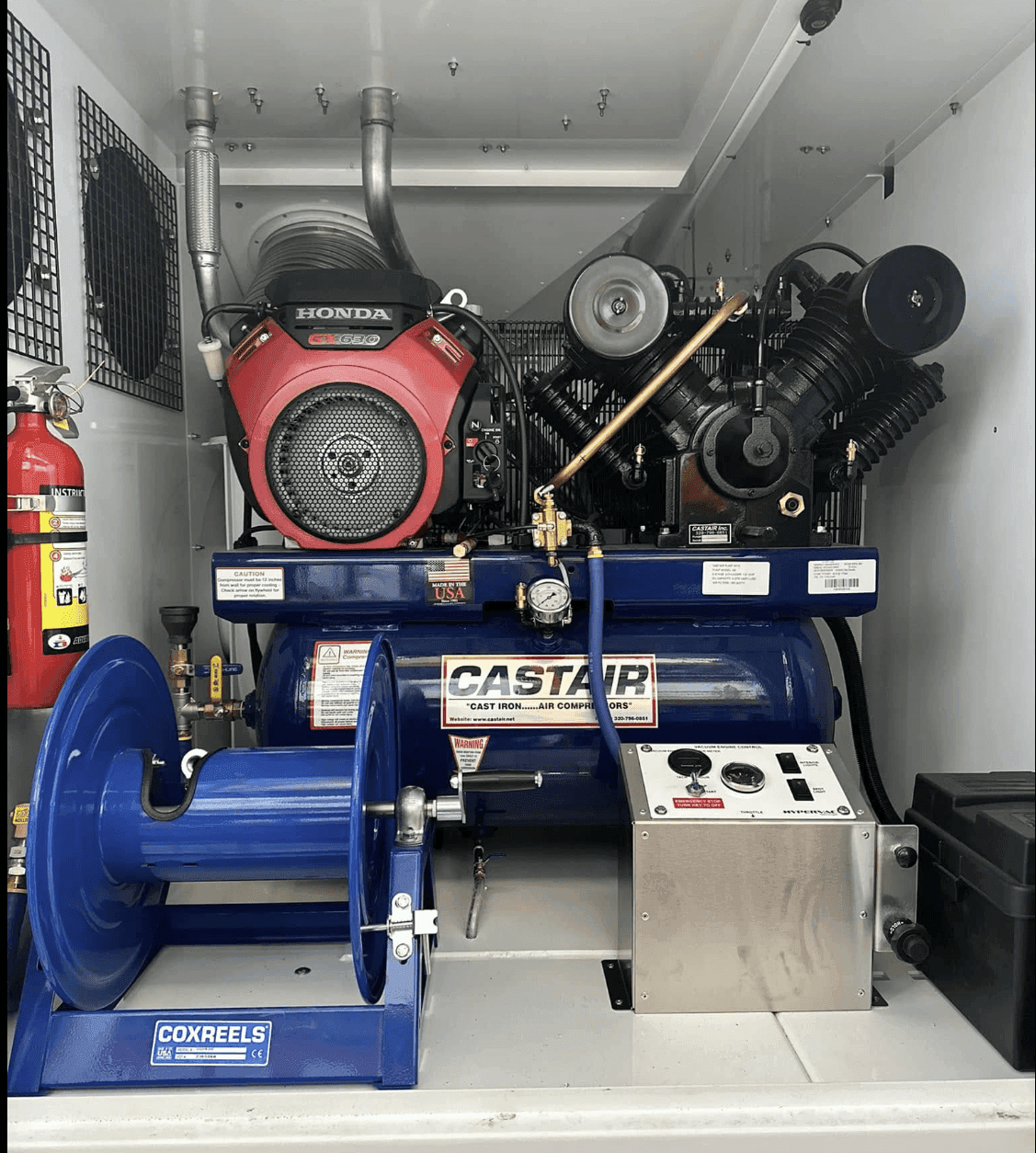
A truck-mounted system is a large vacuum built into the truck. It has far more suction and sends the dust outside, into the truck. A portable system is a smaller vacuum carried into your home and plugged into a wall outlet. Professional portable units can meet industry standards, but they have a fraction of the power — which matters most in the main trunk lines, where most of the debris collects.
Prefer not to call? Get a quote online
Most duct cleaning ads look the same: a smiling technician, a clean vent, a low price. What they rarely mention is the machine doing the work — and that’s one of the biggest differences between a thorough cleaning and a quick once-over. Here’s what you need to know about the two types of equipment, in plain language.
How Each System Works
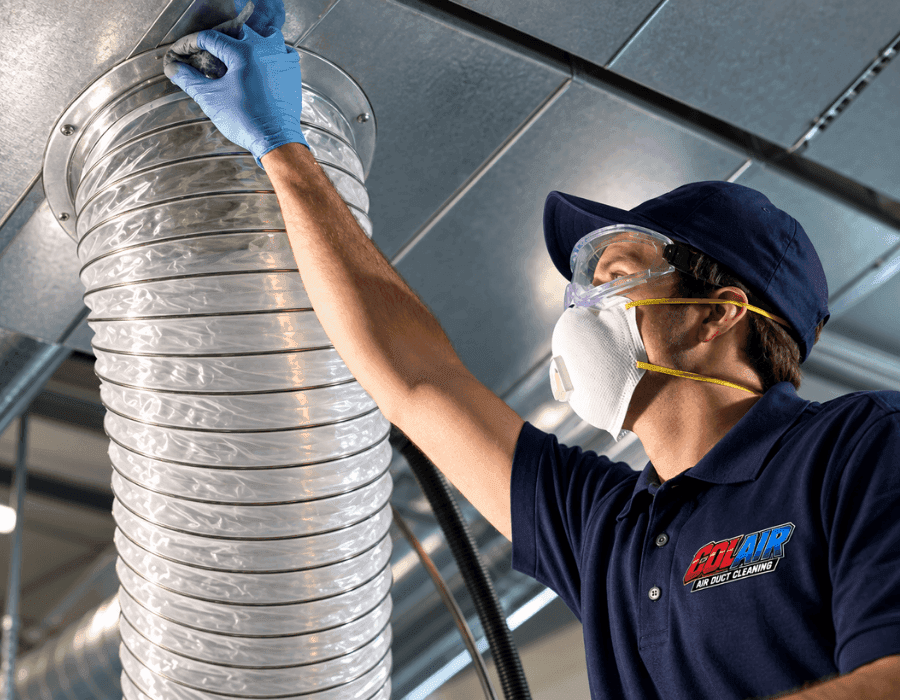
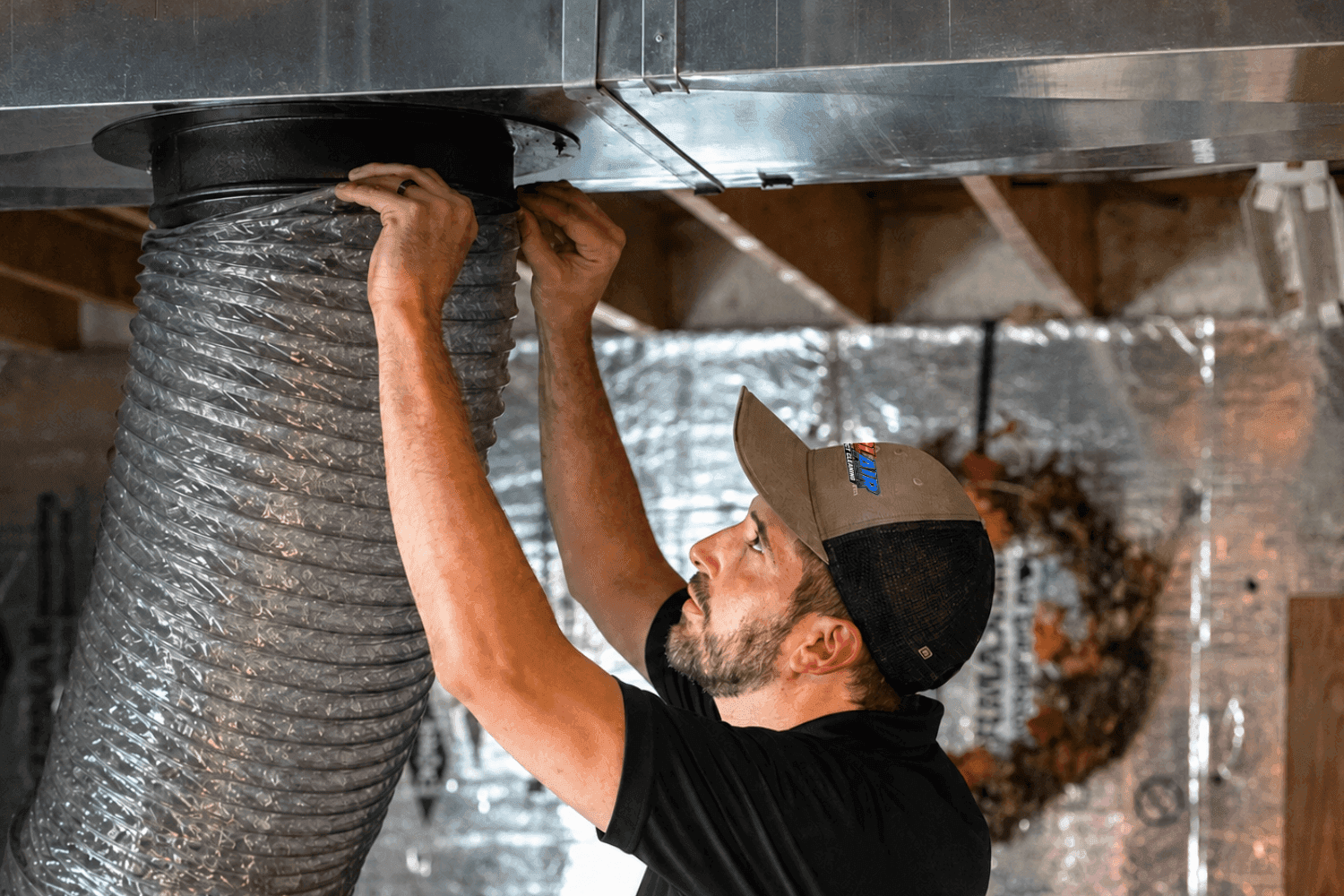
Every proper duct cleaning works the same basic way. The technician connects a vacuum to your ductwork to put the whole system under negative pressure — meaning air is constantly being pulled out. Then they loosen the dust inside the ducts with brushes or air whips, and the vacuum carries it away. The industry calls this source removal. The difference is where that vacuum lives.
Truck-mounted systems
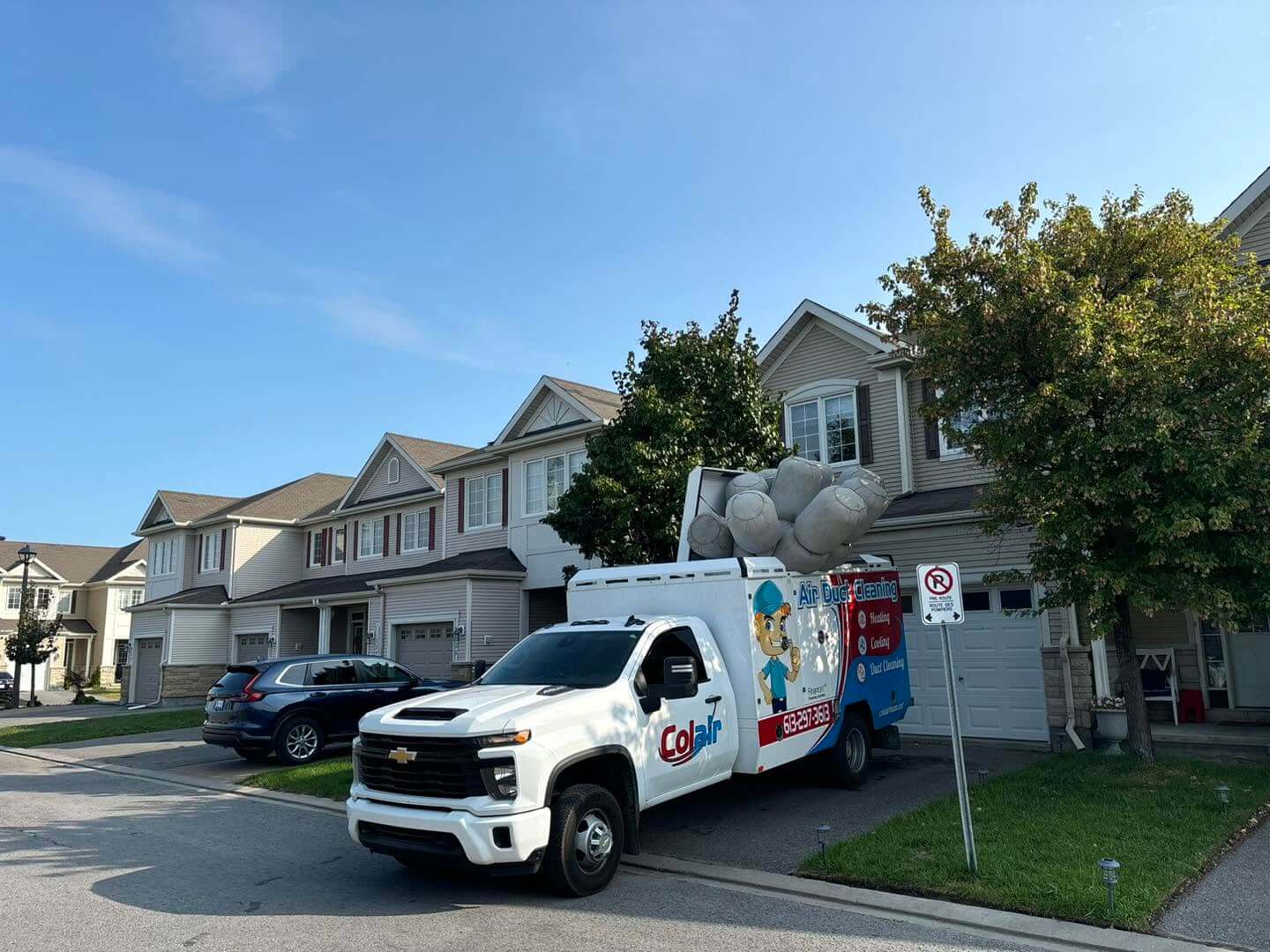
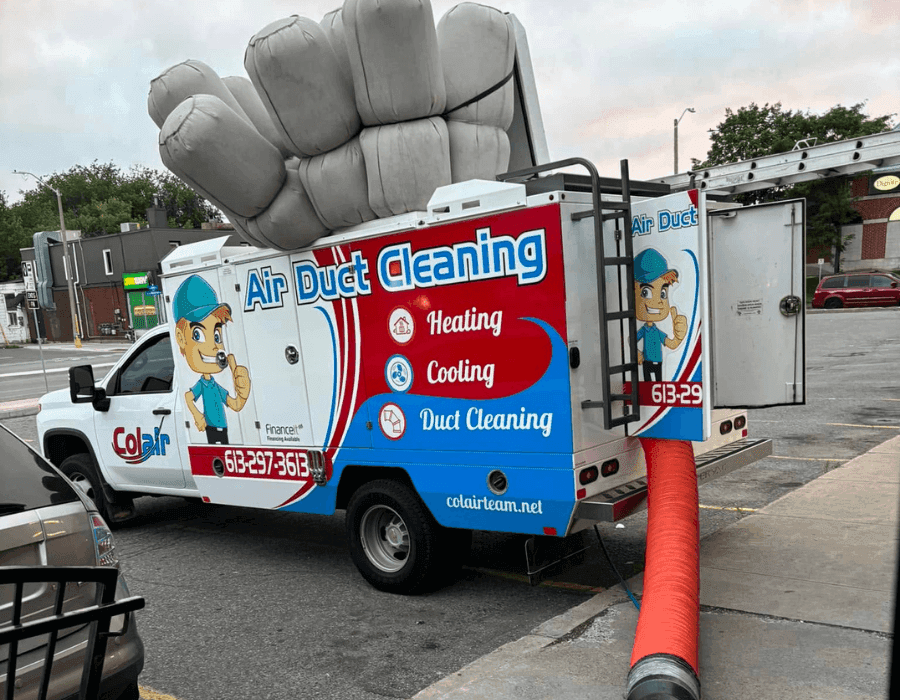
The vacuum is built into the truck and powered by its own engine or generator. A large hose runs from the truck into your home and connects to the main trunk line near the furnace. Everything the hose pulls out ends up in a collection chamber in the truck — outside your home.
Portable systems
The vacuum is a self-contained machine carried into your home, usually set up in the basement and plugged into a household outlet. Dust is caught by filters inside the machine. Professional portable units — sometimes called negative air machines — use HEPA filters so the fine dust they collect doesn’t blow back into the room.
Side-By-Side Comparison
| Truck-Mounted | Portable | |
|---|---|---|
| Airflow | Typically 10,000–20,000 CFM | Typically 1,500–5,000 CFM |
| Power source | The truck's own engine or generator | A household wall outlet |
| Where the dust goes | Outside, into the truck | Filters inside a machine in your home |
| Main trunk lines | Enough suction for the largest ducts | Can struggle with large trunk lines |
| Noise inside | Low — the machine stays outside | Loud — the machine is in your basement |
| Filtration needed | Debris is contained in the truck | Needs a HEPA filter to be safe indoors |
Why Suction Power Matters
NADCA (the National Air Duct Cleaners Association) puts it simply: truck-mounted equipment is “generally more powerful than portable equipment.” In practice, that difference shows up in three places.
1. The main trunk lines
The trunk lines are the large rectangular ducts running along your basement ceiling. Every supply and return branch connects to them, so they collect the most dust, pet hair and construction debris. Because they’re so large, it takes a lot of airflow to keep debris moving through them and out of the system. This is where a weaker machine falls short first.
2. Keeping the whole system under negative pressure
While the technician works on one vent, the rest of the system needs to keep pulling air inward. If the vacuum can’t keep up, loosened dust can drift back out of other vents instead of being pulled away. More airflow means more of your ductwork stays under control at the same time.
3. Heavier debris
Fine dust is easy to move. Drywall dust after a renovation, sawdust, small screws and pet hair clumps are not. Stronger suction is what carries the heavy material all the way out instead of leaving it sitting in the bottom of a duct.
Not All Portable Units Are Equal
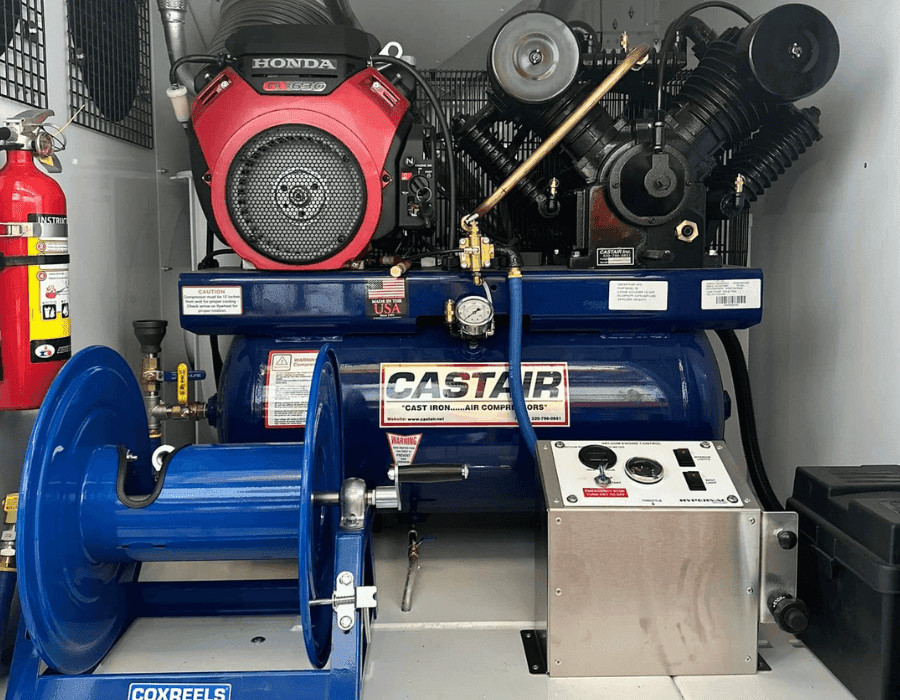
A professional HEPA negative air machine is very different from a shop vacuum. Many shop vacuums move only around 100–200 CFM — a small fraction of even a portable professional unit. If the “equipment” looks like something from a hardware store, it is.
Red Flags With Any Equipment
The machine matters, but how it’s used matters too. Watch for these, whatever equipment a company brings:
Walk Away If You See These
- A shop vacuum or household-style vacuum sold as professional equipment.
- A portable machine with no HEPA filter, exhausting into your home.
- Only the vents you can see get cleaned — returns and trunk lines are skipped.
- The job is done in well under an hour for a whole house.
- A $99 “whole-house” offer that won’t say what equipment they use.
Low prices aren’t automatically a problem — but always ask what the total will be. Our Ottawa duct cleaning cost guide explains what a proper cleaning typically costs and how low-ball offers work.
Questions To Ask Before You Book
- Do you use truck-mounted equipment or a portable unit?
- How much airflow (CFM) does your equipment have?
- If it's portable, does it have a HEPA filter?
- Do you clean the return vents and the main trunk lines?
- What's my total price — and is it in writing?
- Will I get before and after photos?
A good company will answer every one of these without hesitating. For more on comparing companies, see our guide to choosing a duct cleaning company in Ottawa.
The Bottom Line
Both types of equipment can clean ducts, but they aren’t equal. Truck-mounted systems have several times the airflow, keep the dust outside your home, and have the power to properly clean the main trunk lines — where most of the debris is. For a typical house, that makes truck-mounted the better choice. Whatever a company uses, ask about it before you book. Colair uses truck-mounted equipment on every residential duct cleaning.
Sources: NADCA — Proper Cleaning Equipment; NADCA — response on flex duct cleaning (portable HEPA vacuums of 1,500–5,000 CFM)